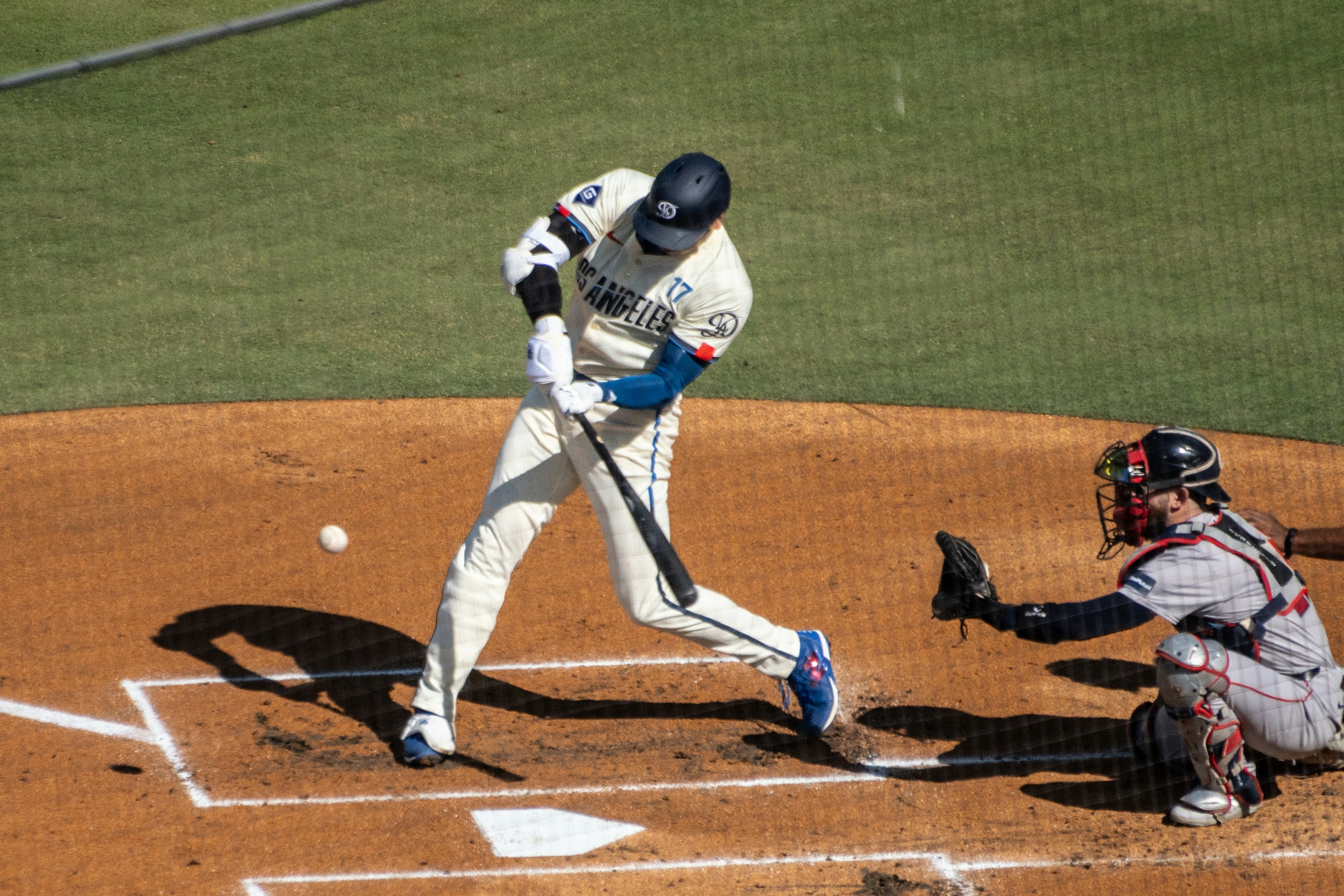
When a Major League Baseball player taps the top of his cap or helmet this season, a computer takes over. Within about 15 seconds, the system delivers a verdict on whether the pitch was a ball or a strike — and the umpire’s call shows up on the scoreboard either confirmed or overturned. Through the first eight weeks of the 2026 season, the computer has overruled the human roughly 54% of the time it has been asked. And one position in baseball is already feeling the consequences.
On May 9, the San Francisco Giants traded Patrick Bailey — widely regarded as the best pitch framer in baseball — to the Cleveland Guardians for a minor-league pitcher and a draft pick. Less than two months earlier, that trade would have been almost unthinkable. Bailey’s specific defensive skill, honed over years, had suddenly become less valuable, almost overnight.
What ABS actually is
The Automatic Ball-Strike system, or ABS, is baseball’s version of the line-calling technology used in tennis. A dozen high-speed Sony cameras track the baseball’s exact path as it crosses home plate. The system compares that path to a digital strike zone calibrated to each batter’s height: 17 inches wide, with the top set at 53.5% of the batter’s height and the bottom at 27%.
The human umpire still calls every pitch in real time. But on any given pitch, the batter, pitcher, or catcher can tap his cap or helmet within about two seconds to challenge the call. The computer’s verdict — confirm or overturn — appears on the scoreboard. Each team gets two challenges per game and keeps them if they win.
Roughly 1% of all pitches end up getting challenged. That distinction matters, and we’ll come back to it.
Why the 54% number needs a caveat
“The robot overrules the human more than half the time” makes for a punchy headline, but it doesn’t mean umpires are getting half their calls wrong. Players save their challenges for pitches they’re confident were missed. The 54% figure — roughly 1,600 successful challenges out of nearly 3,000 attempts through May 18, according to numbers tracked by Baseball Savant, MLB’s official statistics and tracking site, and reported by Athlon Sports — is the success rate on those deliberately chosen, borderline calls.
The bigger picture looks different. MLB Senior Vice President Michael Hill told The Athletic’s Ken Rosenthal that umpires are calling balls and strikes correctly 93.5% of the time this season, up slightly from 92.7% at the same point in 2025. So umpires aren’t suddenly bad. They’re being checked, very selectively, on the pitches most likely to have been wrong — and even then, they’re only being overturned about half the time.
“As with a lot of the new things over the years that MLB has implemented, there’s a lot of talk about it, and then you’re two weeks into the season, it feels totally normal.”
Kevin Cash, Tampa Bay Rays manager, to ESPNDefensive players — catchers and pitchers — win their challenges more often than batters do. Defenders are succeeding around 59 to 61% of the time, batters around 47%, according to numbers from ESPN’s player survey and Rosenthal’s reporting.
The skill that’s quietly losing value
For roughly 15 years, catchers have been paid for a skill called pitch framing. It is the art of catching a borderline pitch in a way that nudges the umpire toward calling it a strike — sticking the glove still, keeping the body quiet, and presenting the ball as if it crossed the heart of the plate. Analysts have estimated that the best framers in the league were worth two to three extra wins per season just on their receiving skill alone. That is roughly the value of an All-Star hitter.
According to a model maintained by the analytics site FanGraphs and cited by ESPN’s Bradford Doolittle on May 19, the value catchers create through framing has dropped about 20% from last year. By FanGraphs’ measure — which estimates how many runs a catcher saves his team through skilled receiving — the top 30 catchers averaged 0.704 such runs per 100 innings in 2025; this year, that figure is 0.565.
The logic is intuitive. If a catcher steals a strike on a pitch that was actually a ball, the batter can now simply tap his helmet and take it back.
Two notes of caution: that drop is from an eight-week sample, and FanGraphs has not published an updated explanation of how its framing model treats challenged versus unchallenged pitches in the ABS era. The trend is real and pointing in the direction you would expect, but how big and how lasting it turns out to be is still an open question.
Bailey, Kelly, and two different stories
Patrick Bailey is the cleanest example of what’s changing. From 2018 through 2025, Baseball Savant credited him with 65 framing runs — second only to Austin Hedges among all catchers. His ability to coax called strikes from pitches just off the edge was, by most accounts, unmatched. Then ABS arrived. His “shadow strike rate” — the share of pitches just off the edge of the strike zone that he managed to turn into called strikes — fell from 50% (first in MLB) in 2024–25 to 47.7% (23rd) in 2026. The Giants traded him for a minor-league left-hander and a draft pick.
“I just felt like I was losing opportunities, losing at-bats,” Bailey told NBC Sports Bay Area after the trade. “I saw the writing was on the wall.”
But the story isn’t entirely about catchers losing ground. Cubs catcher Carson Kelly, a 31-year-old journeyman, is leading the league in something brand new: knowing which pitches to challenge. He has won 21 of 25 challenges as a catcher — 84% — and added an estimated 2.6 runs of value just from his work with the system. ESPN’s Doolittle has nicknamed him the “King of ABS.” It is a skill that did not exist eight weeks ago.
Some thoughtful analysts caution against declaring framing dead. Writing for The Ringer, Ben Lindbergh argued that catchers can actually use their framing skill to fool batters into wasting challenges on pitches that were, in fact, strikes. Cleveland’s willingness to give up real assets for Bailey suggests at least one front office still believes elite framers are worth paying for.
What the players and managers actually think
The debate over robot umpires is genuinely unsettled. According to a poll of 134 players reportedly conducted by The Athletic, 63% of players opposed ABS and 17% favored it. Three of four player representatives on the rules committee voted to approve it; one voted no. Bill Miller, the umpires’ representative, voted no.
Some in baseball love it. “I think it keeps everybody accountable,” Phillies manager Rob Thomson told the AP. Others are skeptical. Retired crew chief Joe West told The Ringer flatly: “They haven’t proven it’s as accurate as they say it is.”
Fans seem to enjoy the spectacle. “The thing I’m most surprised about is the fan interaction,” pitcher Kevin Gausman said in an ESPN survey. “Seems like the fans really enjoy telling the umpire whether it was a strike or not a strike.”
What this means for you
- If you watch the game: Pay attention to the cap-tap. Each team only gets two challenges, so when one happens late in a tight game, the stakes are real. Games are running about four minutes longer on average (2 hours 42 minutes versus 2 hours 38). The walk rate has also spiked to about 9.9% — higher than any season since 1950, according to ESPN’s Jeff Passan.
- If you play or work in baseball: The skill that built a generation of catcher contracts is being repriced in real time. The next free-agent class includes several catchers — Kelly, Ryan Jeffers, Tyler Stephenson, Travis d’Arnaud, Kyle Higashioka — whose deals will test how front offices now value framing versus the new skill of knowing which calls to challenge.
- If you’re curious about AI overruling humans: Baseball is one of the first high-stakes public arenas where a camera-and-computer system is publicly second-guessing human judgment on national television. Notice what MLB chose to do: not full automation, but a hybrid where humans still call every pitch and the machine only steps in on appeal. That design tradeoff — preserving the human role while adding a check — will shape AI in courts, in medicine, and in workplaces. Watch how players, fans, and umpires adapt over the next year.
The eight-week sample is still small. Three things will tell us whether this is a permanent shift or an early-season correction: whether the 54% overturn rate holds as players get better at picking their spots, whether the walk-rate spike persists into the second half of the season, and whether catcher contracts in the 2026–27 offseason actually move in the direction the early data suggests.
For now, the most reliable signal isn’t a number on a leaderboard. It’s a trade. The best framer in baseball just changed teams for less than market value, eight weeks into a new era. Whoever signs the next big catching contract will tell us what the league really thinks framing is worth now.